

Understanding Refinancing
Refinancing involves replacing an existing mortgage with a new one, aiming to secure better terms such as lower interest rates or modified repayment schedules. Homeowners often pursue refinancing to reduce monthly payments, access home equity, or consolidate debt.
Common Reasons to Refinance a Mortgage
Here are seven compelling reasons homeowners might consider refinancing in 2026:
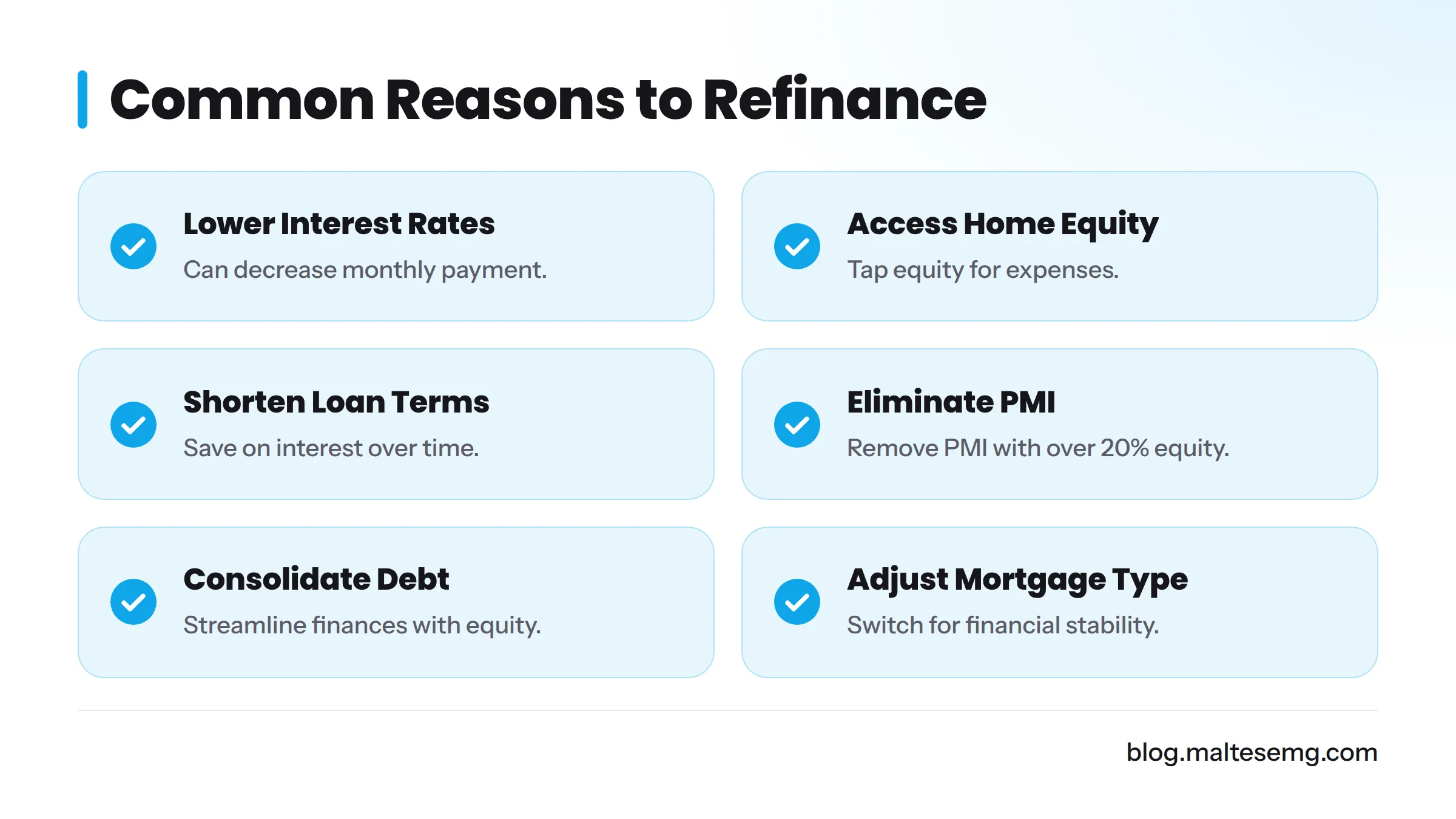
Lower Interest Rates
If current mortgage rates are lower than your existing rate, refinancing can significantly decrease your monthly payment and the total interest paid over the loan's duration.Access Home Equity
A cash-out refinance allows you to tap into your home equity for funding renovations, paying off debt, or other expenses. This approach can yield a solid return on investment if used wisely.Shorten Loan Terms
Refinancing can help you shorten the term of your loan, such as moving from a 30-year mortgage to a 15-year mortgage. Although this often results in higher monthly payments, you’ll save on interest over time.Eliminate Private Mortgage Insurance (PMI)
If your home's value has increased and your equity exceeds 20%, refinancing can remove PMI payments, leading to significant financial savings.Consolidate Debt
A refinance can help consolidate high-interest debt. By tapping into home equity for debt consolidation, you can streamline your finances and potentially lower your interest rates.Adjust Mortgage Type
If your financial situation changes, switching from an adjustable-rate mortgage (ARM) to a fixed-rate mortgage can provide stability against future rate fluctuations.Immediate Financial Needs
Refinancing can improve cash flow by reducing monthly payments or accessing equity, a particularly valuable option during times of unexpected expenses.
Analyzing Your Financial Situation
Before refinancing, assess your financial health using these guidelines:
- Credit Score Check: Verify that your credit score is favorable to secure the best rates.
- Debt-to-Income Ratio: Evaluate your debt load in relation to your income to determine what you can afford after refinancing.
- Loan-to-Value Ratio: Compare your home's current market value against the remaining mortgage balance to identify available equity.
Cost vs. Benefit Analysis
Understanding whether refinancing is worthwhile involves evaluating costs against benefits:
- Costs: Be aware of application fees, appraisal costs, and closing costs, which can total 2% to 5% of the loan amount.
- Benefits: Calculate potential savings from lower interest rates or reduced monthly payments. A simple worksheet can aid in comparing financial scenarios before and after refinancing.
| Scenario | Current Payment | New Payment | Savings |
|---|---|---|---|
| Original Loan | $1,500 | $1,200 | $300/month |
| After Cash-Out Refinance | $1,500 | $1,400 | $100/month |
Identifying Your Refinancing Goals
Clarifying your objectives helps tailor your refinancing decisions:
- Lower Monthly Payments: Focus on minimizing your expenses.
- Accessing Cash: Consider cash-out refinancing for home projects.
- Debt Consolidation: Use equity to reduce overall interest payments on debts.
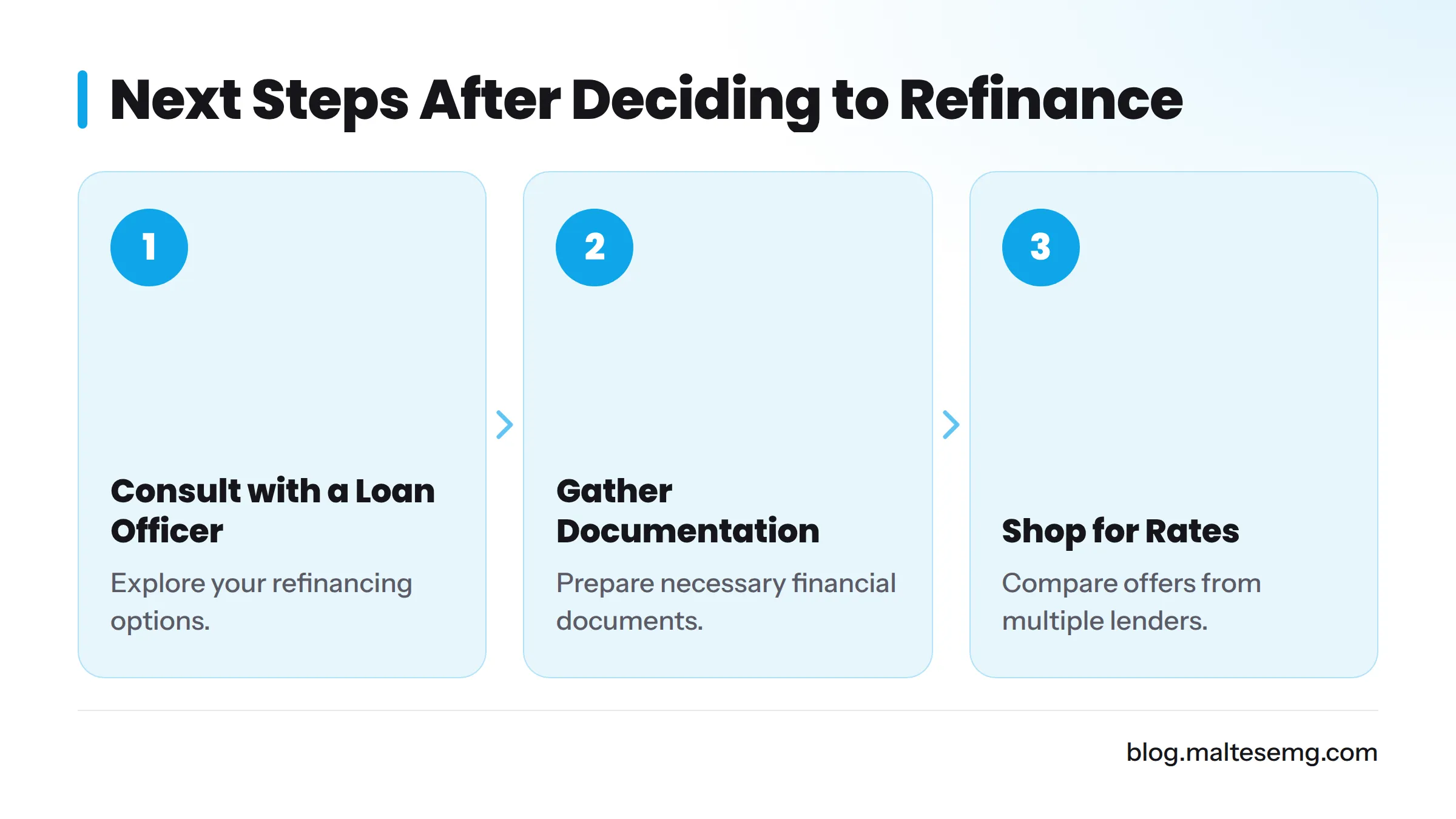
Next Steps After Deciding to Refinance
If you determine that refinancing is right for you, follow these next steps:
- Consult with a Loan Officer: Thoroughly explore your options.
- Gather Necessary Documentation: Prepare income statements, tax returns, and details of your current mortgage.
- Shop Around for Rates: Compare multiple lenders to find the best deal.
FAQs
What are the pros and cons of refinancing?
Refinancing can lower your payments, enable cash access, and save on interest. However, associated costs can diminish some of these benefits if not carefully analyzed.
How do interest rates affect refinancing decisions?
Lower interest rates generally enhance refinancing appeal, but it’s crucial to scrutinize the conditions and fees related to your new loan.
Conclusion
Refinancing offers various opportunities to optimize your mortgage in 2026. By assessing your financial situation, exploring different refinancing options, and understanding the associated costs, you can make informed choices tailored to your long-term financial goals.
Explore more insights on refinancing in 2026, including expert analysis from The Maltese Group.
Matt Maltese
Branch Manager
NMLS 369921
Cardinal Financial Company, Limited Partnership
NMLS: 66247
10845 Griffith Peak Dr 200 03 121
Las Vegas, NV 89135