

What Is a Bank Statement Loan?
Obtaining a mortgage as a self-employed individual can be challenging, particularly when traditional income verification methods fall short. Bank statement loans offer an alternative by allowing borrowers to qualify for home financing based on their bank statements rather than tax returns.
Understanding Bank Statement Loans
Definition and Purpose
A bank statement loan is a non-QM (Qualified Mortgage) product tailored for self-employed borrowers. This type of loan enables individuals to secure financing based on cash flow, as demonstrated through bank statements instead of conventional income verification methods like W-2s or tax returns. It's especially beneficial for freelancers, business owners, and anyone with variable income.
How Bank Statement Loans Work for Self-Employed Individuals
Deposit Qualifiers vs. Tax Returns
Lenders typically review bank statements from the past 12 to 24 months to assess income trends. Unlike annual tax returns that may understate income due to business deductions, lenders focus on total deposits, often providing a clearer picture of financial health.
Eligibility Requirements for Bank Statement Loans
To qualify, borrowers generally need to meet certain criteria:
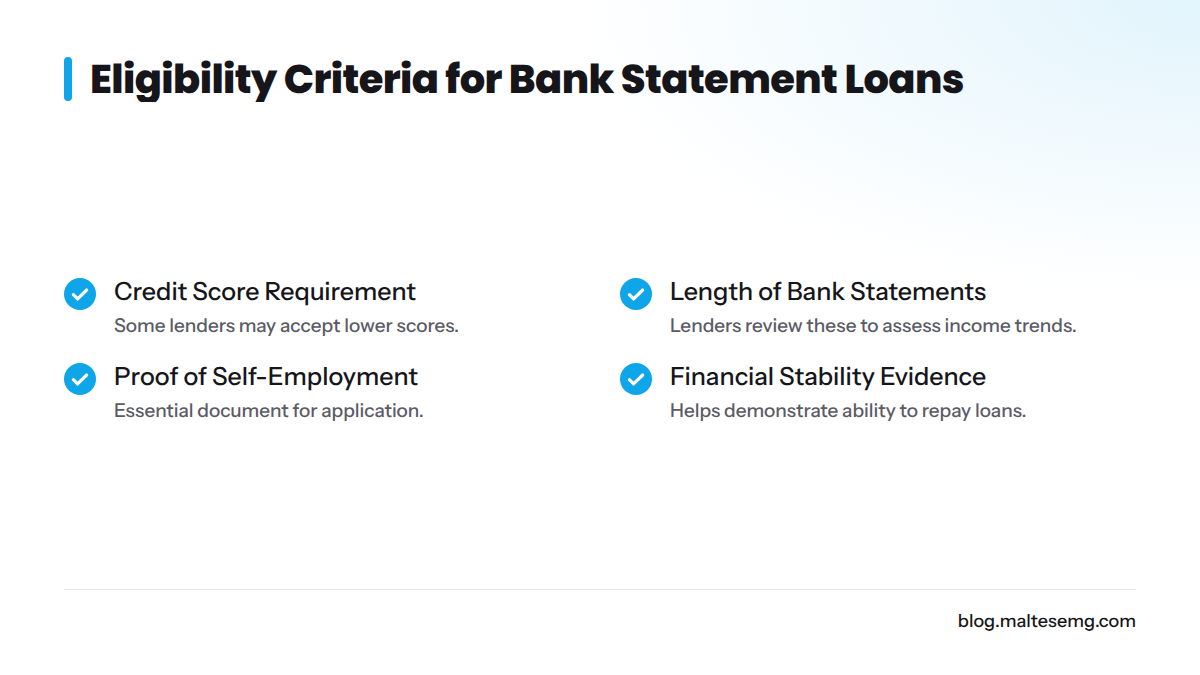
Credit Score Considerations
A credit score of 620 or higher is typically required, although some lenders may accept lower scores under compensating circumstances.
Income Verification Methods
Lenders may require personal or business bank statements to evaluate income, including:
- 12 to 24 months of bank statements
- Proof of self-employment (e.g., business license)
- Evidence of financial stability, such as a strong business track record
Advantages of Using Bank Statement Loans
Flexibility in Verification
One of the major advantages of bank statement loans is their flexibility. Self-employed borrowers can avoid showing tax returns that often reflect reduced income due to deductions. This flexibility significantly enhances the accessibility of homeownership for self-employed individuals.
Documentation Needed for Bank Statement Loans
When applying for a bank statement loan, consider preparing the following documents:
Summary of Key Documents
- Bank Statements: Typically 12-24 months’ worth
- Business License: Proof of self-employment
- Profit and Loss Statements (P&L): To illustrate business income, particularly if it varies
- Asset Statements: Additional documentation reflecting overall financial status
Steps to Apply for a Bank Statement Loan
Follow these steps to streamline your application process:
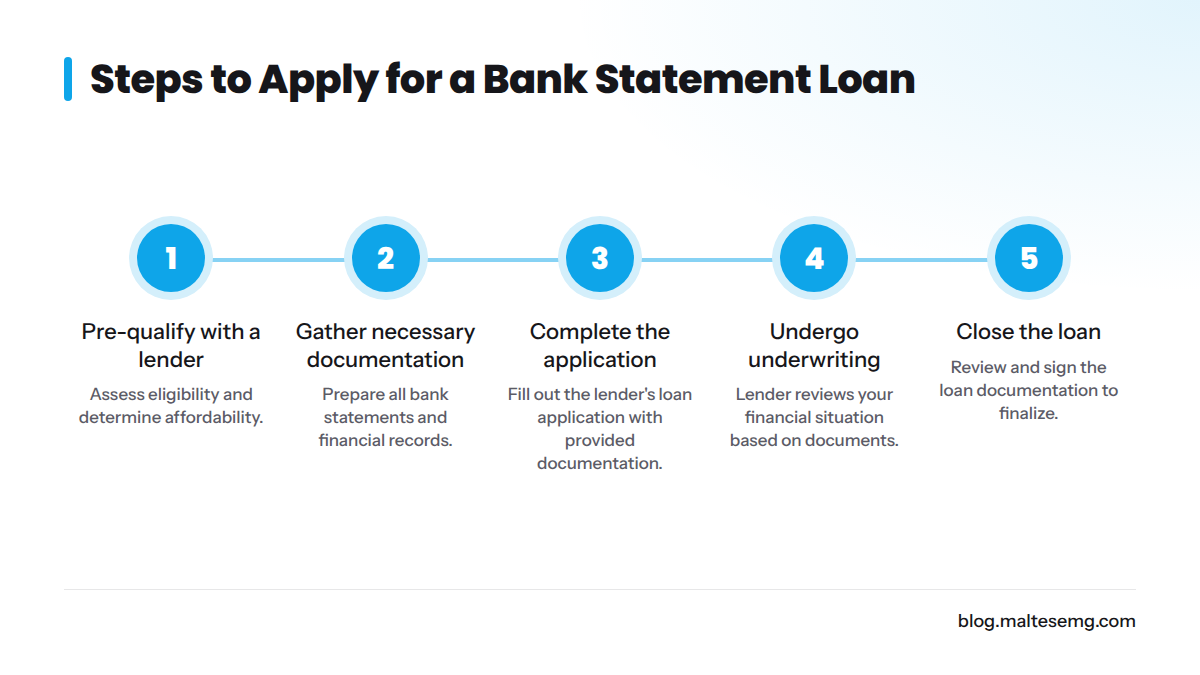
Application Process Breakdown
- Pre-qualify with a lender: Assess eligibility and determine how much you can afford.
- Gather necessary documentation: Prepare all bank statements and financial records.
- Complete the application: Fill out the lender's loan application, providing the required documentation.
- Undergo underwriting: The lender reviews your financial situation based on the provided documents.
- Close the loan: Review and sign the loan documentation.
Frequently Asked Questions
How can self-employed individuals improve their chances of loan approval?
Self-employed borrowers can enhance their approval odds by keeping organized financial records, showing consistent income, and working to improve their credit score.What additional documents may be beneficial during the application process?
Helpful documents can include asset statements and letters explaining any income fluctuations.What types of properties can I purchase with a bank statement loan?
Typically, bank statement loans can be used for primary residences, second homes, or investment properties, depending on lender guidelines.
Video Resource
For a more detailed understanding of bank statement loans, check out this informative video:
Bank Statement Loans Explained | How Self-Employed Buyers Really Qualify
Conclusion
Bank statement loans provide an excellent option for self-employed individuals who encounter difficulties securing traditional mortgage financing. With flexibility in income verification and specific documentation requirements, self-employed borrowers can confidently advance toward homeownership.
For tailored guidance and support, contact
Matt Maltese
Branch Manager NMLS 369921
Cardinal Financial Company, Limited Partnership
NMLS: 66247
10845 Griffith Peak Dr 200 03 121
Las Vegas, NV 89135
Sources
- Bank Statement Loan for Self-Employed - Admortgage
- Bank Statement Loans Explained - Carrington Mortgage
- How a Bank Statement Loan Can Help Self-Employed - First Integrity
- Mortgage Bankers Association - Mortgage Bankers Association
- Veterans Affairs – VA