

What Is a Conventional Home Mortgage?
A conventional home mortgage is a type of home loan that isn't insured or guaranteed by the federal government. These loans can be either conforming or non-conforming, with conforming loans adhering to guidelines set by government-sponsored entities like Fannie Mae and Freddie Mac. Due to their competitive rates and flexibility, conventional mortgages are a popular choice among homebuyers.
Definition of a Conventional Home Mortgage
A conventional mortgage includes any loan not associated with a government program and primarily consists of two types: fixed-rate loans and adjustable-rate mortgages (ARMs). An important characteristic is that these loans must fulfill specific guidelines on loan amounts, borrower credit profiles, and the types of properties being financed.
Who Qualifies for a Conventional Home Mortgage?
Lenders typically assess the following factors to determine eligibility for a conventional mortgage:
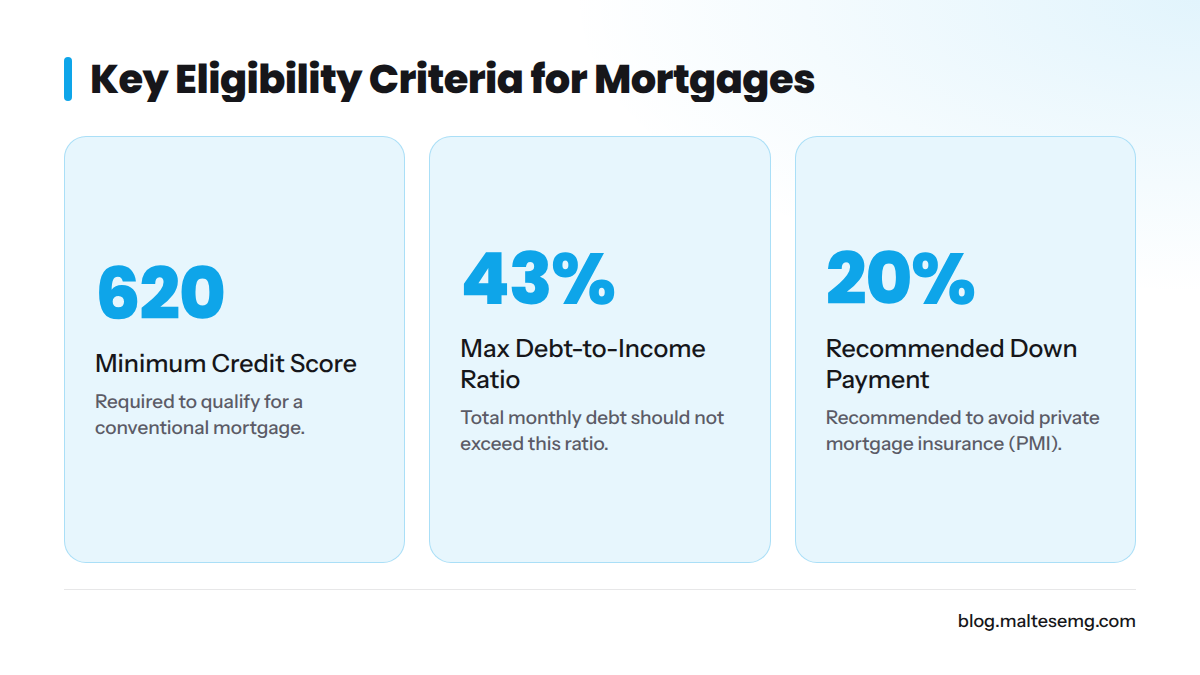
- Credit Score: A minimum credit score of 620 is generally required.
- Debt-to-Income Ratio (DTI): Total monthly debt should ideally not exceed 43% of gross monthly income.
- Down Payment: Though some conventional loans allow for as little as 3% down, a minimum of 20% is recommended to avoid private mortgage insurance (PMI).
Key Features of Conventional Mortgages
- Loan Amounts: Conforming loan limits vary by region and are adjusted annually. For 2026, the standard limit is $647,200 for single-family homes in most areas, which may be higher in high-cost regions.
- Fixed and Adjustable Rates: Borrowers can choose fixed-rate mortgages, which have consistent interest rates throughout the loan term, or adjustable-rate mortgages with fluctuating rates.
- Private Mortgage Insurance (PMI): PMI may be required for down payments less than 20% of the home's purchase price.
Differences Between Conventional and Government-Backed Loans
Conventional and government-backed loans differ in several ways:
- Insured by Government: Government-backed loans (e.g., FHA, VA, USDA) have federal support that protects lenders if borrowers default, unlike conventional loans.
- Eligibility Requirements: Government loans often offer more flexibility in credit and income requirements compared to conventional loans.
- Mortgage Insurance: FHA loans necessitate mortgage insurance for the loan's duration, while conventional loans may eliminate PMI after the equity reaches 20%.
Advantages of Choosing a Conventional Mortgage
Opting for a conventional mortgage offers several benefits:
- Lower Interest Rates: Conventional mortgages generally provide lower rates than government-backed loans, especially for borrowers with favorable credit.
- Flexibility in Use: These loans can finance various property types, including investment properties and second homes.
- No Upfront Mortgage Insurance: Unlike some government-backed options, conventional loans lack upfront mortgage insurance costs.
Common Misconceptions About Conventional Mortgages
Misunderstandings can lead to confusion surrounding conventional mortgages:
- "Only High Credit Scores Qualify": While good credit is advantageous, it's possible to secure a conventional mortgage with moderate credit.
- "You Always Need 20% Down": Although a 20% down payment is typical, many lenders accept lower amounts.
- "Conventional Loans Are Limited": These mortgages are versatile and can finance different property types - not just primary residences.
Conclusion
Conventional home mortgages present a viable option for many buyers, especially those meeting specific eligibility criteria. Familiarizing yourself with the fundamental aspects of these loans - from qualification standards to distinctions with government-backed loans - empowers informed decision-making. If you're contemplating a conventional mortgage, consulting with an experienced mortgage professional can provide clarity and assist you in navigating the available options.
FAQs
1. What constitutes a conventional mortgage?
A conventional mortgage is any home loan not backed by the federal government and adheres to specific guidelines set by entities like Fannie Mae and Freddie Mac.
2. Who is eligible for a conventional mortgage?
Eligibility typically hinges on credit scores, income levels, and debt-to-income ratios.
3. What are the main features of conventional mortgages?
They include fixed or adjustable interest rates, varied loan amounts, and potential PMI requirements based on down payment size.
4. How does a conventional mortgage differ from government-backed loans?
Conventional loans lack government insurance and are subject to stricter requirements compared to FHA, VA, and USDA loans.
5. What are the advantages of choosing a conventional mortgage?
Key advantages include lower interest rates, no mortgage insurance under certain conditions, and eligibility for multiple property types.
Helpful Resources
- For more insights about securing a mortgage, check out the Mortgage & Market Updates.
- Explore further about types of mortgage loans.
Matt Maltese
Branch Manager NMLS 369921
Cardinal Financial Company, Limited Partnership
NMLS: 66247
10845 Griffith Peak Dr 200 03 121
Las Vegas, NV 89135